Call us now: +1(800) 123 4567
Email: oesus@support.com

Choosing the wrong pressure test pump can make calibration slower, introduce contamination, or make it difficult to achieve stable readings. A technician testing a low-pressure differential transmitter, for example, may struggle with a pump designed for high-pressure hydraulic work. Conversely, a pneumatic hand pump may not reach the pressure required to test certain hydraulic instruments.
When selecting a pressure calibrator, engineers must consider not only the reference instrument’s accuracy but also how the pump generates pressure. Pneumatic and hydraulic test pumps serve different applications, and each offers advantages depending on the required pressure range, test medium, and working environment.
This guide compares pneumatic and hydraulic pressure test pumps, explains how each works, and provides practical guidance for choosing the right setup for industrial calibration.
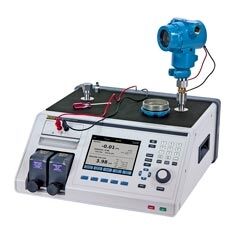
A pressure test pump generates a controlled pressure that engineers can apply to a pressure gauge, transmitter, switch, or sensor. When paired with a suitable reference instrument, the pump helps technicians compare the device under test against a known pressure value.
A complete pressure calibration setup may include:
The pump generates pressure, but the reference instrument measures it. These are separate functions. A pump’s ability to reach a particular pressure does not establish the accuracy of the measurement.
For example, when testing a pressure transmitter configured for 0–10 bar, a technician might apply several pressure points across the range and compare the reference pressure with the transmitter’s output. The selected pump must generate those points safely and maintain sufficient stability for meaningful readings.
Engineers should also distinguish between pressure testing and calibration. A pressure test may check whether equipment withstands or responds to pressure, while calibration compares measurements against a reference under defined conditions.
Pneumatic test pumps use gas, commonly air or nitrogen where appropriate, to generate pressure. Many portable models use a hand-operated mechanism to compress the gas and deliver it to the connected instrument.
Technicians often use pneumatic pumps for low- and medium-pressure applications, particularly when they need a clean, portable setup without introducing liquid into the test circuit.
1. They avoid liquid contamination. Pneumatic pumps suit applications where the test circuit must remain dry. This can be important when testing certain process instruments or equipment that cannot tolerate liquid residue.
2. They support portable fieldwork. Many pneumatic hand pumps are compact and easy to carry between instruments. Technicians can use them during routine maintenance without requiring a dedicated hydraulic setup.
3. They work well for many lower-pressure applications. Depending on the model, a pneumatic pump can generate the pressures required for gauges, pressure transmitters, and selected differential-pressure instruments.
Gas compressibility affects pressure control. When a technician changes the pressure, the gas expands or contracts as conditions change. Consequently, reaching a stable reading and making small adjustments can take time.
Leaks also deserve attention because compressed gas can escape through fittings, seals, or damaged hoses. Temperature changes and variations in connected volume can influence pressure stability.
Pneumatic pumps therefore work best when their pressure range, control characteristics, and connections match the test application. They are not automatically suitable for every low-pressure instrument; some sensitive differential-pressure devices require specialized equipment with finer control.
Hydraulic test pumps generate pressure by moving a liquid through a sealed system. Common test media include compatible oils or other liquids specified by the equipment manufacturer.
Because liquids compress much less than gases under typical calibration conditions, hydraulic pumps can provide controlled pressure generation for many medium- and high-pressure applications.
1. They support high-pressure work. Many hydraulic hand pumps can generate substantially higher pressures than ordinary pneumatic hand pumps. The actual limit depends on the pump design and its specified working range.
2. They can provide responsive pressure control. With a properly filled, leak-free setup, liquid-based systems can make it easier to control pressure changes in appropriate applications.
3. They suit many hydraulic instruments. Technicians can use compatible hydraulic pumps to test pressure gauges, transmitters, and other devices designed for the selected liquid medium and pressure range.
Hydraulic pumps introduce liquid into the test circuit. That creates a potential contamination risk if the device under test requires a dry environment or if the selected liquid is incompatible with its wetted materials.
Technicians must also remove trapped air, maintain clean connections, and manage spills. Residual fluid can create problems when the next test involves a different medium or a sensitive instrument.
A hydraulic pump is not simply a stronger alternative to a pneumatic pump. Its suitability depends on the device under test, the required pressure, and the compatibility of every component in the pressure path.
The most useful comparison focuses on the actual calibration task rather than treating either pump type as universally superior.
Start by identifying the lowest and highest pressures required by the instruments you test. Then choose a pump whose operating range comfortably covers those points.
Pneumatic pumps often suit low- and medium-pressure field applications. Hydraulic pumps often suit higher-pressure work. However, pressure capabilities vary significantly among models, so always check the manufacturer’s specifications instead of relying on the pump category alone.
Also consider the required resolution and pressure stability. A pump may reach the target pressure but still make it difficult to maintain a stable value at a particular test point.
Choose pneumatic equipment when avoiding liquid contamination is important and the instrument supports gas-pressure testing.
Choose hydraulic equipment when the instrument and test procedure permit the selected liquid and the required pressure favors a hydraulic source.
Before connecting either system, verify compatibility with the sensor, seals, hoses, adapters, and fittings. A suitable pump cannot compensate for incompatible materials or a poorly sealed connection.
For technicians who move frequently between plant areas, a compact pneumatic pump may offer practical advantages. Hydraulic pumps can also be portable, but their fluid requirements and cleanup procedures may influence how easily teams use them in the field.
Consider the availability of suitable test media, the cleanliness of the work area, maintenance requirements, and the time needed to establish a stable pressure.
To reduce avoidable measurement problems, teams should also review their overall procedures for reducing errors with industrial calibration equipment.
A practical selection process begins with the instruments and procedures your team already uses.
Record the gauges, transmitters, switches, and sensors that require testing. Include their pressure ranges, pressure reference types, connection requirements, and acceptable tolerances.
For example, a team that checks low-pressure differential transmitters and standard process gauges may need different capabilities from a team that calibrates high-pressure hydraulic instruments.
Avoid selecting a pump based only on the maximum pressure of one instrument. Consider the complete range of applications the equipment must support.
Determine whether the instrument permits gas, liquid, or a specific test medium. Check manufacturer guidance before introducing any fluid.
If the test circuit must remain dry, a suitable pneumatic pump may be the better choice. If the application requires higher pressure and accepts a compatible liquid, a hydraulic pump may be more appropriate.
The reference calibrator must meet the measurement requirements of the test. Review its accuracy specification, resolution, calibration status, and applicable uncertainty considerations.
Also check the pump’s maximum working pressure, hose ratings, fitting compatibility, and fine-adjustment capability. Every component in the pressure path must suit the intended operating conditions.
For a broader discussion of range and accuracy, see how to choose a pressure calibrator by range, accuracy, and pump type.
Think about how frequently the team calibrates instruments, where technicians perform the work, and how they record results.
A portable manual pump may suit occasional field checks. A laboratory with a high calibration workload may benefit from a more controlled pressure source and an integrated measurement setup.
Include maintenance requirements in the decision. Pneumatic systems need attention to seals and leaks, while hydraulic systems also require appropriate fluid management and cleanliness.
Regardless of pump type, good test practices protect equipment and improve the quality of the results.
Remember that a stable reading alone does not prove that an instrument meets its accuracy specification. Compare the results with defined acceptance criteria and follow the applicable calibration procedure.
Pneumatic and hydraulic pressure test pumps serve different needs. Pneumatic pumps often suit clean, portable, low- to medium-pressure applications, while hydraulic pumps commonly support compatible higher-pressure work. The right choice depends on the required range, test medium, pressure stability, instrument compatibility, and working environment.
Before choosing a setup, define the instruments you need to test and verify that the pump and reference calibrator meet the relevant technical requirements. Visit TRUEPOINTLAB to explore industrial measurement and calibration resources that can support your equipment selection and maintenance planning.
Pneumatic pumps use gas to generate pressure, while hydraulic pumps use liquid. Pneumatic systems help avoid liquid contamination, whereas hydraulic systems often suit compatible higher-pressure applications.
A hydraulic pump often suits high-pressure calibration, provided its rated range and test medium match the application. Always confirm the specific model’s pressure limits and compatibility.
Yes. A suitable pneumatic pump can generate test pressure for compatible pressure transmitters when paired with an appropriate reference instrument and an approved calibration procedure.
Contamination, incompatible liquids, and trapped air can affect test performance or damage the instrument. Clean connections and a compatible test medium help maintain reliable measurements.
Not necessarily. The pump generates pressure; a suitable calibrated reference instrument measures it. The complete setup and test procedure determine the quality of the calibration result.
TruePointLab.© 2026. All right reserved